|
CHURCH BOARD REPORTS LVNGH PBBBE niDIHGS
--------------
Dr. Mitchell, Hopkins
Economist, Criticizes
Shore's Attitude
TERMS "BACKWARD CONDITIONS" FACTO
Deplores That Leaders
"Decided To Fall In
With Ignorant" Mob
_______
¦
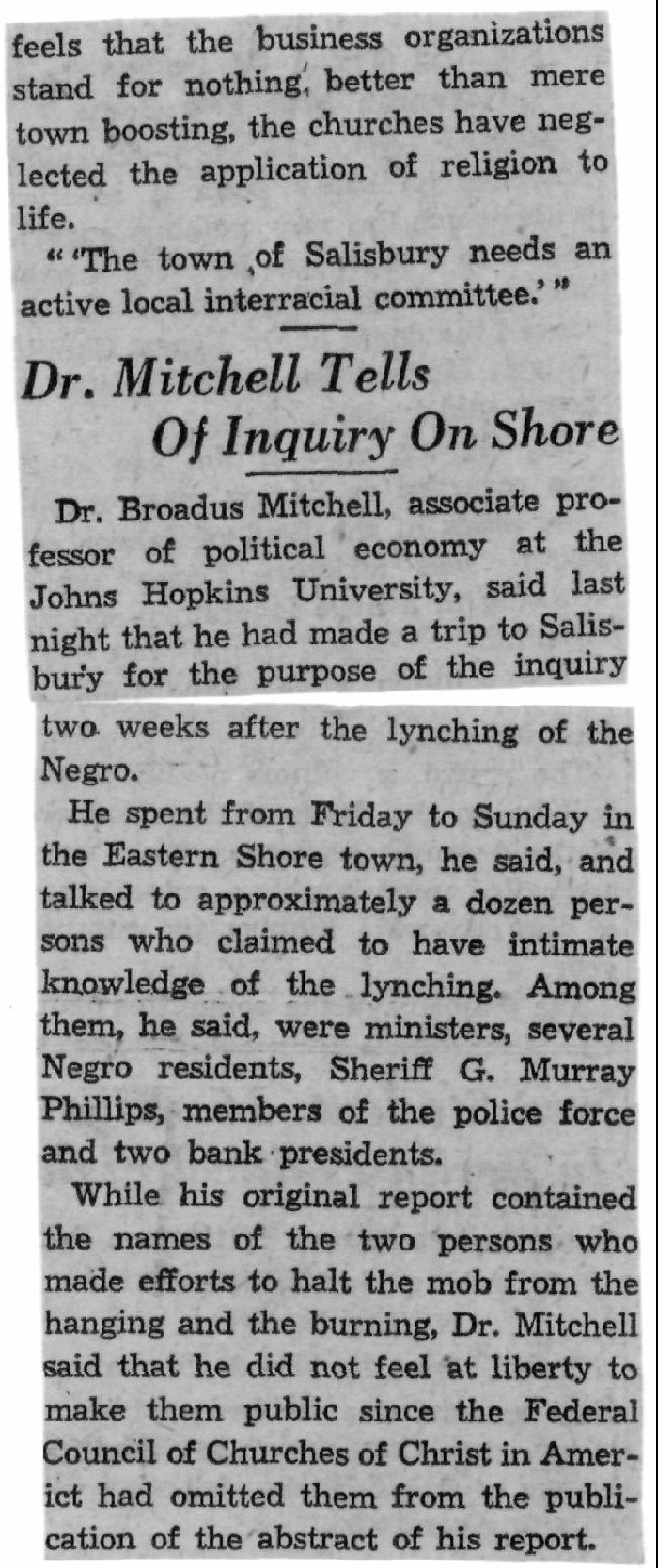
[Special Dispatch, to The Sun] New York, Jan. 24—Results of an Investigation of the lynching at Salisbury, December 4, were made public today by the Federal Council of the Churches of Christ in America. According to a publicity release from the (.--Weil's headquarters, the inquiry was made by Prof. Broadus Mitchell, of the department of political economy, Johns Hopkins University, acting in behalf of the Federal Council's Commission on Race Relations.
"The investigation," the press release continues, "had to do with the hanging and burning of Matthew Williams, a mentally defective Negro, who had shot and killed his employer and who, after trying to kill himself, was taken from the Salisbury Hospital, hanged and burned. Professor Mitchell's study, according to the report issued today, attempted to discover the conditions in the community which made a lynching possible and the effects of the lynching upon the attitudes of the citizens. "Backward Conditions" "As a contributory factor, Professor Mitchell cited the geographical isolation of the community, resulting in rather backward conditions. The chiel explanation given by the residents of the community for the lynching was that two serious crimes in which Negroes were accused had occurred in the locality shortly before, and had aroused public feeling.
"Professor Mitchell made a frank criticism of the attitude of the community as a whole, saying that two weeks after the lynching the place was rife with excuses for the hanging, if not, indeed, full of justification of it.
"Stimulated By -Criticism" "This attitude of self-defense was stimulated by the criticism of Salisbury which came from other parts of the State. The sectional feeling was increased when a local newspaper stated that the Eastern Shore, on which Salisbury is located, feels 'that the greater part of the responsibility for it (the lynching) results from the interference of Baltimore city in the affairs of the Shore . . .' The sectional feeling ran so high that several Salisbury merchants even canceled orders with Baltimore firms.
"Professor Mitchell found only two citizens who had made any effort to prevent the lynching and comments that 'the most sorrowful reflection is not that some ignorant countrymen and townsmen gave way to violence, but that no one from among the intelligent and fair-minded citizens exerted himself with spirit and determination to stop the lynching.' Summary Of Conclusions
|