|
FIND THE LYNCHERS
So Mr. Kennerly, foreman of the coroner's jury in the Salisbury lynching case, is talking about summoning members of the editorial staff of the Sunpapers; and the State's Attorney of Wicomico county is solemnly advising Mr. Kepnerly that he may do so. We are not surprised.
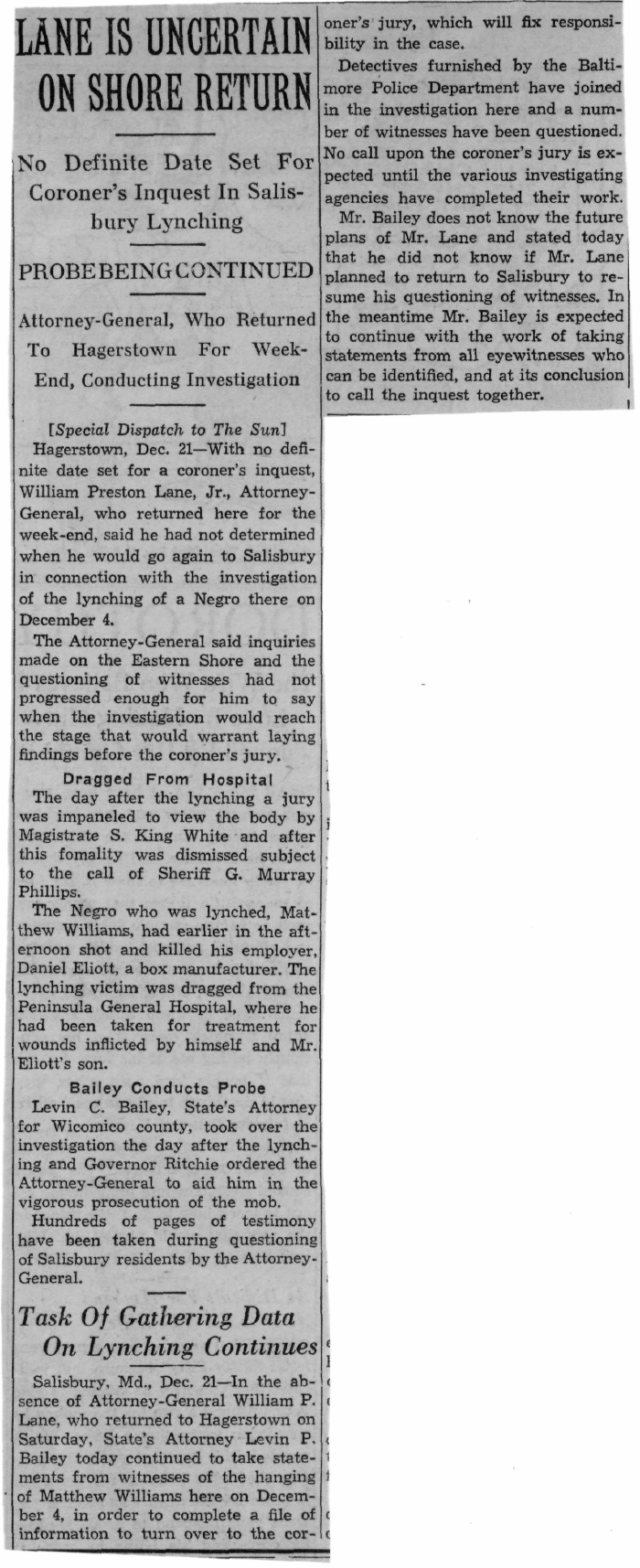
On the instant that it became known the NegrO Williams had murdered Mr. Elliott there was danger of mob violence, of lynch law, in Salisbury. But the State's Attorney kept an engagement twenty miles away. The chief of police placed only a nominal guard at the hospital to which the Negro had been taken. The Sheriff showed no zeal. The representative citizens of Salisbury attended strictly to their very private business.
In due course, therefore, the mob formed, brushed aside law and the feeble and supine authority which is supposed to uphold law in Salisbury, took the Negro from the hospital, hanged him, burned him, mutilated him and some time in the night flung the thing that had been a human being into a woods outside the town. And not one voice has been raised in Salisbury in clear, unequivocal condemnation.
Why be surprised, then, that the foreman. of the coroner's jury in this lynching case turns away from the evidence that lies at his official doorsteps and talks about summoning editors from Baltimore to tell him who did the lynching? It is entirely in character.
Of course, if the foreman of the coroner's jury in Salisbury were actually trying to obtain evidence as to the lynchers he would devote his attention to the great crowd of people who were on the streets on the night of the lynching, who saw the lynchers go into the hospital, who saw them come out with the Negro, who saw them drag the Negro through the streets, who saw them hang him on the courthouse green, who saw them haul him through the streets to be burned, who saw the frightful bonfire on the edge of the Negro settlement.
If the foreman were really trying to get evidence he would go after those in that crowd and pry from them the names of the lynchers. And perhaps some time he will do that. But it will strike a new note in Salisbury. It is much more in character to talk about summoning far-away editors.
Beyond these rather obvious comments, The Sun has nothing to say at this time about Mr. Kennedy's proposal, except to repeat that the Salisbury lynching was a crime and a disgrace to Maryland, and to insist once more that the full weight and resource of the State be brought to bear by Governor Ritchie to the end that the lynchers be apprehended and prosecuted.
|