|
THE BOYCOTT, AND SOME OTHER THINGS
Citizens of the Eastern Shore, who, in the heat of their resentment against unwarranted attacks upon our beloved section, are advocating a boycott of Baltimore business houses, are ill-advised. Baltimore is a part of Maryland, just as the Eastern Shore is a part of Maryland. It is one of the "Nation's largest and most beautiful cities—famed throughout the world for its charm, its citizenry and its progress. We should all be proud that we, as Marylanders, have a part in this magnificent metropolis.
The boycott has alway proven a two :d^ed :rr+rument which may conceivably cut both ways. The Shore needs Baltimore—and Baltimore needs the Shore. Let's drop this talk of "boycott."
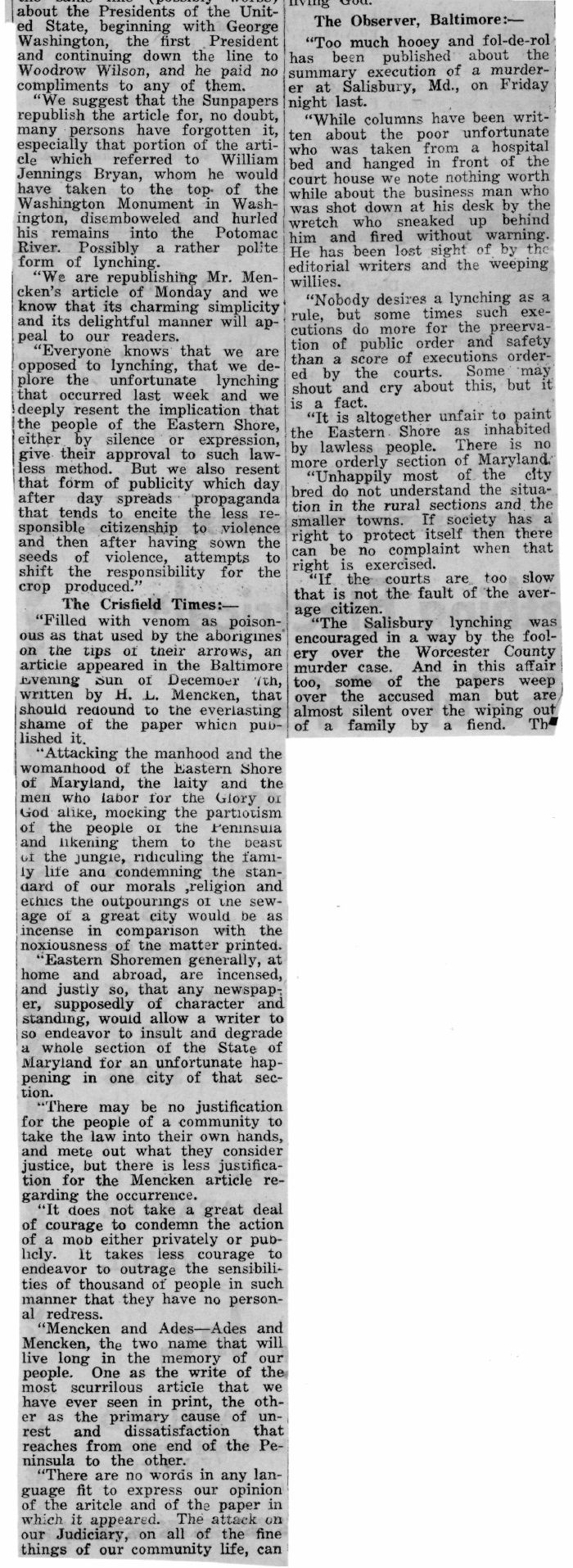
Leading up this talk of boycott, was the unfortunate, and to all decent, law-abiding, and God-fearing men and women, deplorable affair at Salisbury. In their saner moments, not a citzien of the Shore will approve the action of the Salisbury mob. Their act will give cause for a blush of shame to present and all future generations of Eastern Shoremen. Significant, however, is the fact that what feeling of anger and resentment actually exists, is not between the races, white and colored, but between the whites themselves, and this resentment is directed solely against H. L. Mencken, famed, or rather, notorious, writer, who contributes to the Baltimore Evening Sun, and is editor of The American Mercury, a magazine of iconoclastic teachings. This man whose name would indicate that if not he, at least his ancestors were immigrants to America, in a two column article in The Evening Sun, attempts to hold up to ridicule, an entire section of the land which gave shelter to his ancestors, and to him, and in so doing, draws upon himself the condemnation of all fair-minded, right-thinking citizens.
Contrast Mencken's attitude with that of Professor T. H. Kiah, an educated and outstanding member of the Negro race. Kiah's ancestors were bondsmen to the people of the Eastern Shore; brought here against their will, and kept in subjection until an enlightened America gave to them their inalienable right of freedom and citizenship. Mencken's ancestors came to America of their own accord, unless they were actually driven from Europe. Here they grew and expanded under our benevolent, though sometimes misguided system of according every man an equal opportunity. The Menckens were educated at the expense of American taxpayers—and well educated. Professor Kiah, as an advocate of his race, adopts an attitude of gratitude toward the people of America; and in a spirit of thankfulness, advises peace and cordial relationship, to the end that his people may work out their destiny. Mencken pdop+s 8 critical, holier-than-thou attitude, and, with a pen dipped in the dregs of filth, abuse, and lies, indicts half a State.
Which, of the two men, is the better American.—The Eastern Shore Republican.
|